 At the conclusion of Alexandria Heritage Days A Ptolemaic Newsletter and the Sailors Band Plays Mediterranean Tunes
Antiques in Your Home: Art, Wealth, and History
Tamer Salah El Din- Egypt
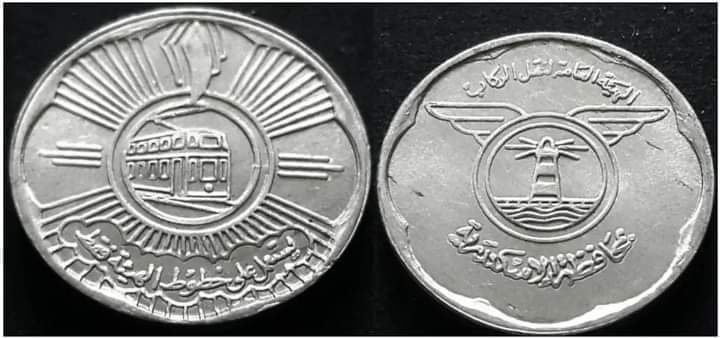
The Best Value Reservoir and a Trade That Never Loses
At the home of the late writer
Naeem Takla, we used to gather about thirty years ago, once a week. Our group
never exceeded seven people, in addition to our host. We came to read or
critique short stories, exchange experiences and hobbies, and, of course,
closely follow the news of the world-renowned author Naguib Mahfouz. Takla was
a devoted attendee of Mahfouz’s weekly salons—held during summers at the San
Stefano Hotel and winters at "Bistrodes" restaurant in Raml Station.
Tickets, Tickets:
In Alexandria’s tramways, the
conductor shouts thousands of times daily as he moves among the standing and
seated passengers: "Tickets, tickets!" This mundane repetition has
occurred millions of times and will continue to do so. Something as simple and
repetitive as this could gain value over time.
I first learned that tram
tickets could become antiques when Mr. Ahmed Rayan, then the director of
Al-Qawmeyya Schools, brought his cherished collection of serialized tram
tickets. I witnessed his meticulous care while passing them around. First, your
hands had to be clean and dry, palms open. Holding those fragile
"papers" carelessly could ruin them. Instead, they were placed on
one’s extended palm as if preparing to greet a loved one. I also saw rare
coins—both silver and paper—including the iconic "Two-Camel Pound."
Art and Wealth in
Ordinary Homes:
As is common among
middle-class families from the royal era, my father—and before him, my maternal
grandfather—preserved original furniture pieces alongside clocks, stamps, small
brass busts, and wooden carvings. My father even owned an antique violin,
which, due to neglect, deteriorated and was ultimately discarded. We lost so
much!
Among extended family and
friends, some middle-class households added an artistic touch to their living
rooms, parlors, and even corners of bedrooms and dining areas. This was done by
selecting statues and paintings—some old, adding a sense of grandeur to the
home, and others modern, created by those who followed contemporary art trends
through paintings or sculptures symbolizing philosophical ideas or stances
toward the world.

The Great Royal
Antiques:
Later, I had a chance
encounter with the seasoned antique dealer and expert, Reda Mohsen. A polyglot
Alexandrian fluent in French, English, and German, he could manage his day in
several other languages. Having lived and traded across Europe, he asserts that
the greatest royal antiques in the world are found in Egypt. Consequently,
royal antiques cannot legally be exported; they can only be bought, sold, and
owned by collectors and dealers within Egypt.
Mohsen explained that the
princes of the Muhammad Ali dynasty would commission the finest artisans from
around the world to create unique, personalized pieces. For example, King
Farouk’s bathroom cabinet, crafted entirely from pure silver and lined with
soft velvet to maintain the clothing temperature, features his monogram "F"
and the embossed royal Egyptian crown.
The Secret of
Antique Trading:
Mohsen emphasizes that antique
trading is fundamentally a trade in "beauty," taste, and knowledge.
It embodies heritage, carrying the fragrance of the past and reviving the
spirit of its original creator.
Interestingly, even the
smallest items, such as a brooch, could qualify as antiques, regardless of
their size. For "antique enthusiasts," grand monuments like the Great
Pyramid or the Eiffel Tower are, in essence, original antiques whose value only
grows over time.
The secret to antique trading
lies in knowledge and experience. As Mohsen points out, no success is possible
without understanding the craft, with expertise developing through practice.
Even then, dealers and collectors might encounter a piece they’ve never seen
before. In such cases, that lifeless object seemingly "calls out,"
captivating the dealer and compelling them to evaluate its quality by
scrutinizing its fine details, discovering its merits and flaws, and
subsequently assessing its value.
The Shoes of Kings
and Celebrities:
A popular saying among antique
traders is that a poor man’s home rarely holds treasures. They define antiques
as "items owned by great individuals, connoisseurs, and the wealthy who
can afford to purchase valuable artifacts." These could range from a
shaving brush, a hair comb, or even a pair of shoes—as long as the item is
unique, custom-made for its owner, and stamped or signed by the artisan. This
includes footwear worn by kings, presidents, and celebrities.
It’s intriguing to learn that
overlooked items from middle-class families’ heritage could hold real value if
properly evaluated. For instance, a letter opener with a gold or silver blade
and a handle made of rhinoceros horn, or seals owned by landowners with grips
made of amber or gold. Notably, gemstones like amber and "faturan"
often surpass precious metals in value—facts that even the most educated
individuals might not know.
Valuable Neglect:
Among the neglected yet
valuable items in our forgotten drawers are old banknotes, photographs, and
greeting cards—especially those crafted by renowned artists or photographers of
kings and presidents. Other examples include old carved furniture, small
statues made of marble or wood that once adorned homes, vintage *sirma* embroidery
and *khayamiya* textiles, and decorative pieces atop *bureaux* and tables found
in our grandparents' homes. Everything old is heritage, and every piece of
heritage is an antique whose value varies with the wealth of its original
owners and their homes.
Immeasurable Wealth:
The truth is that antique
trading in Egypt is of undefined value. Some dealers in Cairo own storerooms
with "goods" exceeding one billion Egyptian pounds. However, the
trade’s total volume remains unknown, as many collectors operate without fixed
shops or locations to display their treasures.
Hence, antique expert Reda
Mohsen advises all Egyptians, "Never sell your family’s heritage, no
matter how tempting the offers. Instead, preserve it for future generations, as
antiques are genuine value reservoirs whose prices never decline but
continually increase."
In conclusion, if your
ancestors were wealthy or skilled artisans, search through what they left
behind. You are likely to uncover art, heritage, and history that could bring
unexpected wealth or even transform you into a collector or the founder of your
own private museum. Why not?
نرشح لك
At the conclusion of Alexandria Heritage Days A Ptolemaic Newsletter and the Sailors Band Plays Mediterranean Tunes
 The Secret Behind the Youssef Chahine Award for the Spanish Film “SECUNDARIAS” at the 41st Alexandria Mediterranean Film Festival
 Michael Jackson, Prince and Paul McCartney: The Rivalries Behind Music Legends
 Between Celtic Enchantment and Egyptian Authenticity: Did the West Preserve the Forgotten Melodies of the Pharaohs?
 STRATEGIC COLLABORATION BETWEEN EL GOUNA FILM FESTIVAL, AIR TAXI EGYPT AND INVISIBLE MEDIA HOUSE
 From Tamer to Olga: Warm Letters Across the Mediterranean
 ? Why Has Arab Critical Taste Deteriorated and the Role of Critics Declined
 the Egyptian writer Naguib Mahfouz
 megan fox